
Best Blood Pressure Monitors: Cuff (Arm vs. Wrist) vs. Smart Connected Devices
Are you using an inaccurate monitor or skipping essential checks because it’s a hassle? Monitoring your blood pressure reliably at home is crucial for heart health management! We dive into the ultimate comparison: should you choose a traditional cuff monitor (arm or wrist) for proven, clinical accuracy? Or is a smart, connected device (like Omron or Withings) better for automatic logging, trend analysis, and sharing data via an app? Stop guessing your numbers! We break down the crucial factors—cuff placement (arm vs. wrist), data synchronization, physician recommendation, accuracy ratings, and overall ease of use—to help you find the most convenient and dependable monitor for your daily routine.
9/29/202511 min read
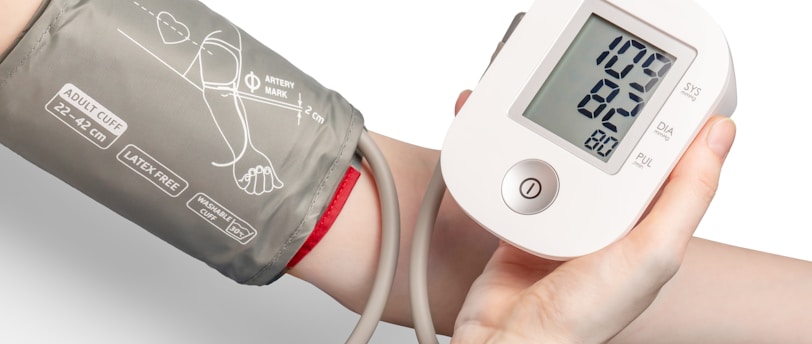

The steady rhythm of your heart is a powerful, life-sustaining force, and the pressure with which it pushes blood through your arteries — your blood pressure — is a vital indicator of your overall health. For decades, taking your blood pressure was primarily the domain of doctors and nurses, confined to the sterile environment of a clinic. But thankfully, those days are long gone. Now, thanks to incredible advancements in health technology, monitoring your blood pressure from the comfort of your own home is not only possible but highly recommended by medical professionals worldwide.
As someone who’s spent thirty years running a national health supply store, I’ve had a front-row seat to the evolution of home health monitoring devices. I remember when the clunky, mercury-filled sphygmomanometers were the standard, and even the early digital versions felt like something out of a sci-fi movie. Today, the options are incredibly sophisticated, user-friendly, and more accurate than ever before. This explosion of choices, while fantastic for consumers, can also be a little overwhelming, can't it?
When it comes to home blood pressure monitoring, you're primarily looking at two main categories: the traditional cuff-based monitors, which come in arm and wrist variations, and the more modern, often sleek, smart connected devices that seamlessly integrate with your digital life. Each approach offers distinct advantages and cater to different needs, preferences, and even tech-savviness levels. It's not about finding a single "best" blood pressure monitor for everyone, but rather, identifying the "best" blood pressure monitor for you. We’re going to dive deep into the nuances of each type, exploring their accuracy, convenience, and how they play with your smartphone or tablet. By the time we’re done, you’ll be armed with all the knowledge you need to make a confident decision about which device will become your trusted partner in managing your cardiovascular health.
Cuff-Based Blood Pressure Monitors: The Tried and True Workhorses
Let’s start with the familiar. Cuff-based blood pressure monitors are what most people picture when they think about checking blood pressure at home. These devices operate on the oscillometric method, detecting oscillations in arterial blood flow as the cuff inflates and deflates. They're typically reliable, and when used correctly, provide accurate readings that healthcare professionals trust. Within this category, you’ve got two main players: arm cuff monitors and wrist cuff monitors.
Arm Cuff Monitors: The Gold Standard for Accuracy
Think of the arm cuff monitor as the reliable old friend in the blood pressure monitoring world. These devices utilize a cuff that wraps around your upper arm, usually just above the elbow. When activated, the cuff inflates to temporarily stop blood flow in your brachial artery, then slowly deflates, allowing the device to detect the subtle pulsations as blood flow returns. This is where it measures your systolic (top number) and diastolic (bottom number) pressures.
The reason arm cuff monitors are often considered the "gold standard" for home use is their proximity to the heart and the larger, more stable artery they measure. The brachial artery in your upper arm is a major artery, providing a more consistent and reliable reading location compared to smaller, more peripheral arteries. Doctors and medical organizations like the American Heart Association (AHA) generally recommend arm cuff monitors for their consistent accuracy.
Using them does require proper technique: sitting still, feet flat on the floor, back supported, arm resting on a surface at heart level, and ensuring the cuff is snug but not too tight. But once you get the hang of it, it becomes second nature. Many models come with memory functions, storing past readings, and some even detect irregular heartbeats. They are, without a doubt, a cornerstone of effective home blood pressure management.
Who is an Arm Cuff Monitor For?
Arm cuff monitors are ideal for:
Individuals prioritizing accuracy above all else: If your doctor has emphasized precise readings, this is often the recommended choice.
Those with a diagnosis of hypertension (high blood pressure): Consistent and reliable monitoring is crucial for managing this condition.
People with larger or smaller arm circumferences: Many models offer a variety of cuff sizes to ensure a proper fit, which is critical for accuracy.
Anyone comfortable with a slightly more involved (but still simple) setup: The need for proper arm positioning.
Individuals managing chronic conditions: Diabetes, kidney disease, or other conditions where blood pressure monitoring is vital.
Wrist Cuff Monitors: The Convenience Contender
Now, let's talk about the wrist cuff monitor. These devices are smaller, more compact, and wrap around your wrist, much like a large watch. Their appeal lies squarely in their convenience and portability. They're incredibly easy to use, often requiring less effort to position than an arm cuff, and can be slipped into a bag for on-the-go monitoring.
However, this convenience often comes with a trade-off in potential accuracy. The arteries in your wrist are smaller and deeper than the brachial artery in your upper arm. This makes them more susceptible to variations caused by body position, movement, and even subtle changes in temperature. To get an accurate reading with a wrist monitor, it's absolutely crucial to position your wrist correctly, often at heart level, and remain perfectly still. Even a slight bend in your wrist can significantly skew the results.
Despite these caveats, wrist monitors have come a long way. Many modern versions incorporate sophisticated sensors and algorithms to compensate for some of these variables. For casual monitoring, or for individuals who find arm cuffs uncomfortable or difficult to position (e.g., due to limited mobility or very large arms), a wrist monitor can be a viable option, provided proper technique is consistently applied. It's like comparing a perfectly brewed espresso (arm) to a very good instant coffee (wrist) – both get the job done, but one is generally more robust and consistent.
Who is a Wrist Cuff Monitor For?
Wrist cuff monitors are best suited for:
Individuals prioritizing ultimate convenience and portability: Great for travel or quick checks throughout the day.
Those who find arm cuffs uncomfortable or difficult to use: For anatomical reasons or mobility issues.
People looking for a discreet monitoring solution: Their small size makes them less conspicuous.
Younger individuals or those with generally healthy blood pressure: For casual monitoring rather than strict medical management of hypertension.
Anyone whose doctor specifically recommends a wrist monitor (often with a caution about technique).
Smart Connected Devices: The Future of Home Health Monitoring
Here's where things get really interesting, and frankly, exciting. Smart connected blood pressure monitors are the new kids on the block, and they're rapidly changing how we interact with our health data. While many of these devices still use the same fundamental cuff technology (usually arm-based, given the accuracy benefits), their "smart" aspect comes from their ability to connect wirelessly – typically via Bluetooth – to your smartphone or tablet.
This connectivity unlocks a whole new world of possibilities. Instead of scribbling down readings in a notebook, your measurements are automatically synced to a dedicated app. These apps are often incredibly powerful, offering features like:
Automatic data logging: No more manual entries!
Trend tracking: Visualize your blood pressure over days, weeks, months, or even years. This is invaluable for identifying patterns and the effectiveness of lifestyle changes or medication.
Data sharing: Easily share your readings with your doctor or family members. Many apps can generate professional-looking reports.
Reminders and alerts: Get prompts to take your blood pressure at consistent times.
Insights and educational content: Some apps provide personalized insights based on your readings or offer educational resources about blood pressure management.
Integration with other health platforms: Many can sync with Apple Health, Google Fit, or other wellness apps, creating a holistic view of your health data.
Smart connected monitors essentially transform raw numbers into actionable insights. They empower you to become a more active participant in your health management, giving you the tools to understand your body better and communicate more effectively with your healthcare provider. It’s like having a personal health assistant living right inside your phone.
Who is a Smart Connected Device For?
Smart connected blood pressure monitors are perfect for:
Tech-savvy individuals: Those who are comfortable with smartphones and apps.
Anyone who wants to track trends and visualize their data: Beyond just single readings.
Patients whose doctors have asked for regular data logging: Simplifies the process and provides clear reports.
Individuals committed to comprehensive health management: Who want to integrate blood pressure data with other health metrics.
Those seeking personalized insights and educational resources: To better understand and manage their condition.
Families monitoring the health of elderly relatives: Allows for remote tracking and sharing.
Accuracy, Convenience, and App Integration: The Deciding Factors
Let’s consolidate our understanding by directly comparing these vital aspects.
Accuracy:
Arm Cuff Monitors: Generally considered the most accurate and reliable for home use due to the larger, more stable brachial artery. Least susceptible to positional errors.
Wrist Cuff Monitors: Can be accurate if used perfectly, but are more sensitive to positioning errors and movement, potentially leading to less consistent readings. Not recommended for primary diagnosis or management of severe hypertension without doctor's explicit guidance.
Smart Connected Devices: Their accuracy is determined by the underlying cuff technology. Most commonly, they are arm-cuff based, inheriting the accuracy benefits of that design. The "smart" aspect refers to data handling, not the measurement itself.
Convenience:
Arm Cuff Monitors: Moderately convenient. Requires sitting still and proper arm positioning. Setup might take a minute or two.
Wrist Cuff Monitors: Highly convenient. Small, portable, quick to put on. Ideal for on-the-go checks.
Smart Connected Devices: Highly convenient for data management. Readings are automatically logged and analyzed. The physical act of taking the measurement is as convenient as the underlying cuff type (arm or wrist).
App Integration:
Arm Cuff Monitors (Basic/Non-Smart): No app integration. Readings must be manually recorded. Some have internal memory for limited recall.
Wrist Cuff Monitors (Basic/Non-Smart): No app integration. Manual recording or limited internal memory.
Smart Connected Devices: This is their defining feature. Seamless app integration for automatic logging, trend analysis, data sharing, reminders, and personalized insights. Essential for long-term tracking and engagement.
Real Product Reviews: My Top Picks from Years of Experience
After decades of stocking shelves and advising customers, I've seen which blood pressure monitors truly stand the test of time and deliver on their promises. Here are seven real products that consistently earn high marks for reliability, user-friendliness, and effective health management, complete with their typical price ranges.
Omron Platinum Blood Pressure Monitor (BP5450) - Smart Arm Cuff
Description: Omron is a household name in blood pressure monitoring, and for good reason. The Platinum BP5450 is a top-tier smart arm cuff model. It features a simple one-touch operation, a large easy-to-read display, and can store 200 readings for two users. Its standout feature is Bluetooth connectivity to the Omron Connect app, allowing seamless syncing of data, tracking trends, and sharing readings with your doctor. It also has a dual-display for simultaneous systolic and diastolic readings.
Price Range: $$80 - $$120
Why I recommend it: This is my go-to recommendation for serious home monitoring. It combines Omron's renowned accuracy and reliability with excellent smart features. The app is intuitive and makes tracking incredibly easy, which is crucial for long-term health management. It’s a workhorse for effective hypertension management.
Withings BPM Connect (Smart Arm Cuff)
Description: Withings is known for its sleek, user-friendly smart health devices, and the BPM Connect is no exception. This compact, wireless arm cuff monitor gives instant color-coded feedback on the device itself and syncs automatically via Wi-Fi or Bluetooth to the Health Mate app. The app tracks trends, offers insights, and integrates seamlessly with other Withings devices. It charges via USB and provides extended battery life.
Price Range: $$90 - $$130
Why I recommend it: For those who appreciate minimalist design and robust smart features, the Withings BPM Connect is a winner. Its Wi-Fi connectivity means you don't even need your phone nearby to sync data, and the app's holistic approach to health data is fantastic. It's a premium experience.
A&D Medical UA-651BLE (Smart Arm Cuff)
Description: A&D Medical is another highly respected brand in clinical and home health monitoring. The UA-651BLE is a Bluetooth-enabled arm cuff monitor that connects to the A&D Connect app. It boasts clinically validated accuracy and a simple, straightforward operation. It also offers a "cuff fit error" indicator and irregular heartbeat detection, ensuring reliable readings. Its durable construction means it’s built to last.
Price Range: $$50 - $$80
Why I recommend it: A&D provides serious medical-grade accuracy in a home device. The UA-651BLE is a solid choice for those who want dependable readings and seamless app integration without excessive frills. It's often favored by medical professionals for its consistent performance.
Omron 7 Series Wireless Wrist Blood Pressure Monitor (BP6350) - Smart Wrist Cuff
Description: If a wrist monitor is your preference, the Omron 7 Series Wireless is a strong contender. It's sleek, very compact, and connects via Bluetooth to the Omron Connect app. It features a built-in sensor that guides you to the correct wrist position at heart level, which is critical for accuracy with wrist devices. It also detects irregular heartbeats and offers a memory for 90 readings.
Price Range: $$60 - $$90
Why I recommend it: For a wrist monitor, the Omron 7 Series significantly mitigates the accuracy concerns by incorporating a positioning sensor. This makes it one of the most reliable wrist options available, perfect for those who truly prioritize portability and ease of use.
Greater Goods Bluetooth Blood Pressure Monitor (Smart Arm Cuff)
Description: Greater Goods offers a more budget-friendly entry into smart blood pressure monitoring without sacrificing essential features. This arm cuff monitor connects to their Balance Health app, which allows for unlimited user profiles, simple tracking, and CSV export of data for sharing. It also includes irregular heartbeat detection and stores up to 120 readings on the device itself.
Price Range: $$30 - $$50
Why I recommend it: This is an excellent value option for those looking for a smart arm cuff monitor without breaking the bank. It provides accurate readings and a functional app for tracking, making it accessible to a wider audience who wants to get started with smart health monitoring.
Omron 3 Series Upper Arm Blood Pressure Monitor (BP7100) - Basic Arm Cuff
Description: Sometimes, you just need a reliable, no-frills device that does one thing exceptionally well. The Omron 3 Series is exactly that. It's a standard, non-smart arm cuff monitor that delivers accurate readings with simple one-touch operation. It has a large display and stores up to 14 readings. It's the perfect choice for those who don't want app connectivity and prefer a straightforward, manual approach to monitoring.
Price Range: $$30 - $$50
Why I recommend it: If smart features aren't a priority and you simply want a consistently accurate and easy-to-use arm cuff monitor at a great price, this Omron model is a winner. It's a testament to the brand's core competency in blood pressure measurement.
iHealth Clear Wireless Blood Pressure Monitor (Smart Arm Cuff)
Description: The iHealth Clear is a sleek, modern arm cuff monitor with a large, colorful display that shows readings instantly in clear, color-coded zones. It connects via Wi-Fi and Bluetooth to the iHealth MyVitals app, which provides extensive tracking features, trend analysis, and cloud storage. It’s particularly user-friendly, even for those less familiar with technology, and its rechargeable battery adds to its convenience.
Price Range: $$70 - $$100
Why I recommend it: The iHealth Clear offers a fantastic combination of aesthetic appeal, user-friendliness, and robust smart features. The large, color-coded display is especially helpful for quick interpretation of results, and the app provides excellent long-term tracking capabilities. It's a great choice for those who appreciate both form and function.
Beyond the Device: Making Your Readings Count
Owning a blood pressure monitor, whether it’s a basic cuff or a sophisticated smart device, is only half the battle. To truly leverage its power, consistency and proper technique are paramount. Think of it like learning to play a musical instrument; you can have the finest guitar in the world, but if you don't practice correctly, the music won't be harmonious.
Here are a few tips I always share with my customers to ensure they get the most accurate and valuable readings:
Time it Right: Take your blood pressure at the same time each day, ideally in the morning before medication and food, and again in the evening.
Prepare Yourself: Avoid caffeine, exercise, and smoking for at least 30 minutes before taking a reading. Empty your bladder.
Position is Key: Sit quietly for 5 minutes before the reading. Sit upright, back supported, feet flat on the floor (not crossed). Ensure your arm (or wrist) is supported at heart level.
Take Multiple Readings: Take two or three readings a minute apart and average them. This helps account for minor fluctuations.
Keep Records: Whether manual or via an app, consistent record-keeping is vital for spotting trends and sharing data with your doctor.
The journey of managing your blood pressure is a marathon, not a sprint. It involves understanding your body, making informed lifestyle choices, and working closely with your healthcare provider. The right blood pressure monitor, chosen with careful consideration of its accuracy, convenience, and how it integrates into your life, can be an incredibly powerful ally on this journey. It empowers you with knowledge, transforms passive monitoring into active engagement, and ultimately, helps you take a proactive role in safeguarding one of your most precious assets: your heart health. So, embrace the technology, understand the numbers, and take control of your well-being. Your future self will thank you.
Home Health & Medical
Get in touch for inquiries and support.
Subscribe
contact@homehealthandmedical.com
© 2025. All rights reserved.