
Best TENS Units: Wired vs. Wireless
Tired of living with nagging pain? A TENS unit can be a game-changer, but you're facing a critical choice: Should you stick with a reliable wired device or upgrade to the freedom of a wireless model? We're diving into what really matters, comparing the effectiveness of pain relief and targeted muscle stimulation alongside the ultimate convenience of portability. Let's cut through the tech jargon and find the TENS unit that fits seamlessly into your life, acting like your personal, pocket-sized pain specialist!
9/29/202513 min read

Persistent pain, whether acute from an injury or chronic from a long-term condition, can cast a long shadow over daily life. It limits movement, disrupts sleep, and saps energy, making even simple tasks feel insurmountable. While medication, physical therapy, and other treatments are vital, many individuals seek non-pharmacological, at-home solutions to manage their discomfort effectively. This is where Transcutaneous Electrical Nerve Stimulation, or TENS, units step in – small, mighty devices that use gentle electrical currents to provide remarkable pain relief.
Having spent three decades at the helm of a national health supply store, I've had the distinct privilege of witnessing firsthand the transformative power of TENS therapy. I remember when these devices were primarily found in physical therapy clinics. Today, they are accessible, user-friendly, and increasingly sophisticated, empowering individuals to take control of their pain management from the comfort of their own homes. I've seen countless customers, initially skeptical, become ardent advocates after experiencing the soothing, pain-blocking sensations that TENS provides.
However, just like the diverse ways pain manifests, the TENS unit market offers different solutions. When you start exploring these incredibly helpful devices, you'll primarily encounter two distinct categories: the traditional wired TENS unit and the innovative wireless TENS unit. While both serve the crucial purpose of delivering therapeutic electrical impulses, they achieve this with fundamentally different designs, impacting their portability, ease of use, and overall discretion. Are you looking for a robust, feature-rich device for targeted pain relief, or do you crave the freedom and subtlety of a truly wire-free solution for active use? Understanding these nuances is crucial to making an informed decision that will perfectly align with your specific pain relief needs, your desired level of mobility during treatment, and your lifestyle. So, let’s take a deep dive into the fascinating world of TENS units, dissecting their functionalities, exploring their pain relief mechanisms, and guiding you towards the perfect device to help you find comfort and move with greater ease.
Wired TENS Units: The Traditional, Robust Relievers
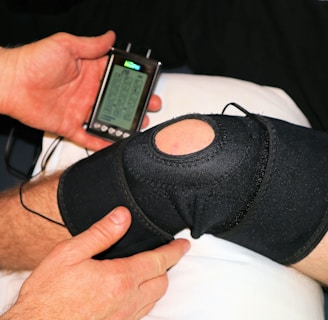
Let's begin with the classic and widely used type: the wired TENS unit. These devices typically consist of a main control unit (often pocket-sized), which is connected to adhesive electrode pads via thin wires (usually 2 to 4 wires, allowing for 2 to 4 electrode pads per channel, and most units have dual channels). You place the adhesive pads on your skin around the painful area, connect them to the wires, and then plug the wires into the main unit.
The mechanism by which TENS units provide pain relief is thought to be twofold, often described by the Gate Control Theory of Pain and the Endorphin Release Theory:
Gate Control Theory: The electrical impulses sent by the TENS unit stimulate non-pain-carrying nerve fibers. These activated nerve fibers then "close a gate" in the spinal cord, preventing pain signals from reaching the brain. Imagine a busy highway; the electrical signals create so much "traffic" that the pain signals simply can't get through.
Endorphin Release Theory: Low-frequency, high-intensity TENS stimulation may also trigger the release of endorphins, which are your body's natural painkillers. These potent neurochemicals interact with receptors in the brain to reduce the perception of pain, providing a more widespread and lasting analgesic effect.
Wired TENS units are known for their robust functionality and versatility. They often offer a wide range of customizable programs, modes, frequencies, and intensity levels, allowing users to fine-tune the therapy to their specific pain type and tolerance. Many come with multiple channels, enabling you to treat several areas of the body simultaneously or to target a larger area with more pads. Their wired connection generally ensures a consistent and strong electrical signal, which can be crucial for deeper or more persistent pain. They are generally more affordable than wireless units and often combine TENS with EMS (Electrical Muscle Stimulation) functions, offering broader therapeutic applications for muscle re-education and strengthening.
However, the "wired" aspect is also their main drawback in terms of portability. The wires can sometimes tangle, limit movement during treatment, or be conspicuous under clothing. This can restrict use during activities or make it less discreet for public settings. Despite this, for stationary use at home, in the office, or during light activities, wired TENS units remain highly effective and are a cornerstone of non-pharmacological pain management.
Who is a Wired TENS Unit For?
Wired TENS units are excellent for:
Individuals requiring targeted, customizable pain relief: With a wide range of modes, frequencies, and intensities.
Users who want to treat multiple areas simultaneously: Thanks to dual or quad channels.
Those primarily using the device at home or in a stationary setting: Where wire management is less of an issue.
People on a tighter budget: Generally more affordable upfront.
Patients seeking strong, consistent electrical impulses for persistent pain.
Users who also want EMS functionality for muscle stimulation and re-education.
Wireless TENS Units: The Freedom of Unencumbered Relief
Now, let's turn our attention to the innovative and increasingly popular wireless TENS unit. These devices are a testament to modern miniaturization and connectivity. Instead of a main control unit with separate wires, the electrical components are often integrated directly into compact, discreet pods that attach directly to the electrode pads. These pods then communicate wirelessly, usually via Bluetooth, with a remote control or a smartphone app.
The defining advantages of wireless TENS units are their exceptional portability and discretion. Without any wires to tangle or manage, these units can be worn comfortably and inconspicuously under clothing, allowing users to move freely during treatment. This freedom is invaluable for active individuals, those who need pain relief during work, exercise, or social activities, or simply for anyone who dislikes the clutter of wires. Imagine getting effective pain relief while doing chores, working at your desk, or even going for a light walk – that's the liberation a wireless TENS unit offers.
In terms of pain relief and muscle stimulation, wireless units deliver the same fundamental therapy as their wired counterparts. They still use electrical impulses to block pain signals (Gate Control Theory) and/or stimulate endorphin release. Many wireless units are also combo TENS/EMS devices, offering both nerve stimulation for pain and muscle contraction for strengthening or recovery. They typically offer multiple programs and intensity levels, controlled conveniently via a remote or app.
However, wireless units often come with a higher cost compared to basic wired models due to the integrated technology. Their battery life is crucial, as the pods themselves need to be charged. While incredibly convenient, users might occasionally experience minor connectivity issues (though this is rare with reputable brands) or a slightly lower maximum intensity compared to the most powerful wired units. Despite these minor trade-offs, the sheer convenience and freedom offered by wireless TENS units make them a compelling choice for a modern, active lifestyle.
Who is a Wireless TENS Unit For?
Wireless TENS units are ideal for:
Active individuals: Those who want pain relief during exercise, work, or while moving freely.
Users prioritizing discretion: Easy to wear under clothing without visible wires.
People who find wires inconvenient or prone to tangling.
Anyone seeking on-the-go pain management: Highly portable and easy to use anywhere.
Users comfortable with smartphone apps for control and tracking (for app-controlled models).
Patients who need continuous, unobtrusive therapy throughout the day.
Those willing to invest more for advanced convenience and freedom.
Pain Relief, Muscle Stimulation, and Portability: The Core Differentiators Unpacked
Let's break down these critical aspects to clearly understand the distinctions between wired and wireless TENS units.
Pain Relief (Effectiveness & Customization):
Wired TENS Units: Offer highly effective and customizable pain relief. Their physical connection ensures a consistent, strong signal, allowing for a very wide range of adjustable parameters (frequency, pulse width, intensity, modes/programs). They often have multiple channels for treating several distinct areas simultaneously or for using larger electrode configurations for broad pain relief. Generally, you can find wired units with very high maximum intensity levels suitable for deep pain.
Wireless TENS Units: Provide effective pain relief with the added benefit of freedom of movement. They also offer multiple programs and intensity levels, controlled remotely. While they deliver the same fundamental therapy, some ultra-compact wireless units might have a slightly lower maximum intensity or fewer highly customizable parameters compared to the most powerful wired models, but this varies significantly by brand and price point. Their discreet nature can enhance overall adherence and thus pain management.
Muscle Stimulation (EMS Functionality):
Both wired and wireless TENS units can offer EMS (Electrical Muscle Stimulation) functionality. Many devices are "combo" units that include both TENS (for nerve stimulation/pain relief) and EMS (for muscle contraction/re-education/strengthening).
Wired TENS/EMS Combos: Very common and often found in more powerful configurations. They offer robust EMS capabilities for muscle rehabilitation, strengthening, and recovery, thanks to consistent power delivery through wires.
Wireless TENS/EMS Combos: Also available and increasingly popular. They provide EMS functionality with the convenience of no wires, making them great for muscle activation during workouts or recovery on the go. The power of EMS in wireless units has significantly improved, rivaling many wired counterparts.
Portability:
Wired TENS Units: Offer moderate portability. The main unit is typically pocket-sized and battery-powered, making it easy to carry. However, the presence of wires connecting the unit to the electrode pads means limited freedom of movement during treatment and potential tangling or snagging. Less discreet for wearing under clothes.
Wireless TENS Units: Offer superior portability and maximum freedom. The absence of wires means the small pods attach directly to the electrodes, allowing users to move unencumbered during therapy. They are highly discreet and ideal for active use, travel, work, or anytime you need pain relief without being tethered. Battery life of the pods is a key consideration for continuous portability.
The Ultimate Choice: Which TENS Unit Will Silence Your Pain?
So, after dissecting the ins and outs of wired and wireless TENS units, which one emerges as the ideal choice for your pain relief needs? The answer, as I've found over decades in my health supply store, isn't a simple triumph of one over the other. Instead, it's about aligning the device's design and features with your specific pain, lifestyle, and preferences for convenience and discretion.
Choose a Wired TENS Unit if:
You need maximum customization of programs, frequencies, and intensity levels for varied pain types.
You plan to primarily use the device at home or in stationary settings where wires aren't a major hindrance.
You need to treat multiple body areas simultaneously with multiple channels (often standard on wired units).
You are looking for the most cost-effective option upfront.
You require the absolute highest intensity for deep, persistent pain.
You also want robust EMS functionality in a combo unit.
Choose a Wireless TENS Unit if:
Freedom of movement and discretion are paramount during your pain relief sessions.
You need to use the device on-the-go, at work, during light activity, or while traveling.
You find wires inconvenient, prone to tangling, or simply dislike them.
You prioritize a sleek, compact, and inconspicuous design.
You're comfortable with app control via your smartphone (for many models).
You're willing to invest more for the enhanced convenience and untethered experience.
For many individuals with chronic pain, the ideal solution often involves both types of TENS units. A robust, multi-channel wired unit for powerful, customized treatments at home, perhaps for more intense sessions or larger muscle groups. And a smaller, discreet wireless unit for on-the-go pain management throughout the day, allowing for continuous relief without lifestyle interruption. This dual approach offers the ultimate flexibility and tailored pain management for any situation.
Crucially, always consult with your doctor, physical therapist, or other healthcare provider before using a TENS unit, especially if you have an underlying medical condition, a pacemaker, or are pregnant. They can advise on proper pad placement, appropriate settings, and whether TENS therapy is suitable for your specific condition.
Real Product Reviews: My Top Picks from Years of Experience
Having observed the TENS unit market for three decades, interacting with countless customers and physical therapists, I've developed a deep understanding of which models truly stand out for their effectiveness, durability, and user satisfaction. I've heard firsthand accounts of profound pain relief and renewed freedom of movement. Here are seven real TENS unit products, encompassing both wired and wireless options, from leading manufacturers, that I confidently recommend, complete with their typical price ranges.
Omron Max Power Relief TENS Unit (PM500) (Wired - Best All-Around for Home Use)
Description: The Omron Max Power Relief (PM500) is a popular and highly-rated wired TENS unit designed for powerful, customizable pain relief at home. It features 15 pre-set programs (for various body areas like back, shoulder, joint, leg, arm) and 20 intensity levels. It has a compact, user-friendly design with a large LCD screen and intuitive controls. It's known for its consistent power delivery and ease of use.
Price Range: $$70 - $$100
Why I recommend it: For general home use, the Omron Max Power Relief is an excellent workhorse. Its wide range of pre-set programs makes it easy for beginners, while its strong intensity levels are effective for deeper pain. It's reliable, durable, and a perennial best-seller for good reason.
iReliev Wireless TENS + EMS Therapeutic Wearable System (Wireless - Best All-Around Wireless Combo)
Description: The iReliev Wireless System is a fantastic combo TENS/EMS unit that offers true wireless freedom. It consists of small, rechargeable pods that attach directly to electrode pads and are controlled by a handheld remote (or app). It features 14 therapy programs (7 TENS, 7 EMS) and 25 intensity levels. Its discreet design allows for wear under clothing, providing pain relief and muscle stimulation on the go.
Price Range: $$150 - $$200
Why I recommend it: The iReliev Wireless System is a game-changer for active individuals. Its complete wireless design, combined with effective TENS and EMS functions, offers unparalleled convenience and discretion. It's powerful enough for serious pain relief and muscle work, making it perfect for use during daily activities or light exercise.
Auvon Dual Channel TENS EMS Unit (Wired - Best Budget Combo)
Description: The Auvon Dual Channel TENS EMS Unit is a highly affordable yet feature-rich wired combo device. It offers 24 massage modes (for both TENS and EMS applications) and 20 intensity levels, with dual independent channels. It's compact, rechargeable, and comes with a clear LCD display. Despite its budget-friendly price, it provides surprisingly robust pain relief and muscle stimulation.
Price Range: $$30 - $$50
Why I recommend it: For those on a tight budget who still want the versatility of both TENS and EMS, the Auvon unit is an outstanding value. It delivers effective therapy with a good range of modes and intensity, making it accessible for home use without a significant investment.
PowerDot 2.0 Duo by Therabody (Wireless - Premium/Smart App Controlled)
Description: The PowerDot 2.0 Duo is a premium, FDA-cleared wireless electrical muscle stimulator from Therabody (makers of Theragun). It connects via Bluetooth to a sophisticated smartphone app that offers personalized programs for pain relief (TENS), muscle performance, recovery, and wellness. It uses advanced technology to guide pad placement and adjust intensity. It's incredibly compact, discreet, and rechargeable.
Price Range: $$300 - $$400
Why I recommend it: For tech-savvy users who want a truly smart, app-controlled TENS/EMS experience with personalized guidance, the PowerDot 2.0 Duo is excellent. Its intelligent programming and seamless app integration make it a top choice for athletes and anyone serious about data-driven pain relief and muscle optimization.
TechCare Plus 24 Modes TENS Unit (Wired - Feature-Rich Budget Pick)
Description: The TechCare Plus is another popular wired TENS unit known for its extensive range of 24 pre-set modes and 20 intensity levels, making it highly versatile for various pain conditions. It features dual independent channels, a rechargeable battery, and a clear backlit LCD screen. It's often praised for its ease of use and consistent output despite its affordable price.
Price Range: $$30 - $$50
Why I recommend it: This TENS unit offers an impressive number of modes and a good intensity range for its price, making it a great value for comprehensive pain relief at home. It’s user-friendly and reliable, appealing to those who want lots of options without spending a lot.
Quell 2.0 (Wearable/Wireless - Chronic Pain Focus)
Description: Quell is a unique, FDA-cleared wearable pain relief device specifically designed for chronic pain conditions. It's worn on the upper calf and uses a proprietary OptiTherapy® technology to stimulate sensory nerves, activating the body's natural pain relief response. It's compact, discreet, rechargeable, and connects to a smartphone app for therapy control and sleep tracking. It provides automated, consistent therapy throughout the day and night.
Price Range: $$200 - $$300 (plus potential for replacement electrodes)
Why I recommend it: For individuals with widespread chronic pain (like fibromyalgia, neuropathy), Quell offers a different approach to TENS by targeting a broader systemic pain relief response. Its wearable, hands-free design and focus on chronic conditions make it a compelling option for consistent, long-term relief.
Belifu Dual Channel TENS EMS Unit (Wired - Value & Accessories)
Description: The Belifu Dual Channel TENS EMS Unit is a highly rated wired combo unit that often comes with a generous set of accessories, including multiple electrode pads of various sizes, lead wires, and a storage bag. It features 24 modes and 20 intensity levels, with independent dual channels. It's rechargeable and provides effective pain relief and muscle stimulation, offering great bang for your buck.
Price Range: $$25 - $$45
Why I recommend it: This unit is a fantastic value for money, especially with the included accessories. It provides solid wired TENS and EMS functionality, making it a great starter kit for home pain management without a big investment.
Beyond the Buzz: A Holistic Approach to Pain Management
Choosing the best TENS unit, whether a robust wired model or a liberating wireless one, is a fantastic step towards taking control of your pain. But like any powerful tool, its effectiveness is maximized when it's integrated into a comprehensive, holistic approach to your health and well-being. My decades in the health supply business have consistently shown me that sustainable pain management is a collaborative effort between you, your body, and your healthcare team.
Here are some crucial additional insights I always share with my customers to ensure their TENS unit use is safe, effective, and truly enhances their quality of life:
Consult Your Healthcare Provider First: This is paramount. Always consult with your doctor, physical therapist, or other healthcare professional before using a TENS unit, especially if you have an underlying medical condition (e.g., heart condition, epilepsy), a pacemaker or other implanted medical device, or are pregnant. They can confirm if TENS therapy is appropriate for your specific condition and advise on proper pad placement and settings.
Proper Electrode Pad Placement: This is critical for effectiveness. Electrodes should always be placed on clean, dry skin around the perimeter of the painful area, typically at least one inch apart, ensuring the current flows through the affected nerves/muscles. Avoid placing pads directly over joints, wounds, or sensitive areas. Many units come with electrode placement guides, but your physical therapist can provide personalized guidance.
Experiment with Settings: TENS units offer a variety of modes (e.g., burst, continuous, modulated) and adjustable parameters (frequency, pulse width, intensity). Experiment to find the settings that provide the most effective pain relief for your specific pain. What feels good for one person might not for another. Start with low intensity and gradually increase until you feel a strong but comfortable tingling sensation, without pain or discomfort.
Don't Overuse: While TENS is generally safe, prolonged use at high intensities or leaving pads on for excessively long periods can cause skin irritation. Follow manufacturer guidelines, typically 15-60 minutes per session, 2-3 times per day.
Electrode Pad Care & Replacement: The adhesive pads lose their stickiness over time, which can reduce conductivity and effectiveness. Clean them with water after each use and store them on their protective backing. Replace pads regularly (e.g., every 15-30 uses or when they no longer stick well) for optimal performance and hygiene.
Combination Therapy: TENS works wonderfully as part of a broader pain management strategy. Combine it with stretching, light exercise (as permitted by your doctor), heat or cold therapy, mindfulness techniques, and prescribed medications.
Listen to Your Body: If you experience any discomfort, redness, burning sensation, or increased pain, stop using the device and consult your healthcare provider.
Ultimately, choosing the best TENS unit, whether a versatile wired model or a liberating wireless one, empowers you to take an active role in managing your pain. By making an informed choice, learning proper technique, and integrating it into a holistic approach to your health, you're not just alleviating discomfort; you're reclaiming your ability to move, engage, and live a fuller, more active life. So, embrace the power of electrical therapy, find your comfort, and feel the difference it can make.
Home Health & Medical
Get in touch for inquiries and support.
Subscribe
contact@homehealthandmedical.com
© 2025. All rights reserved.